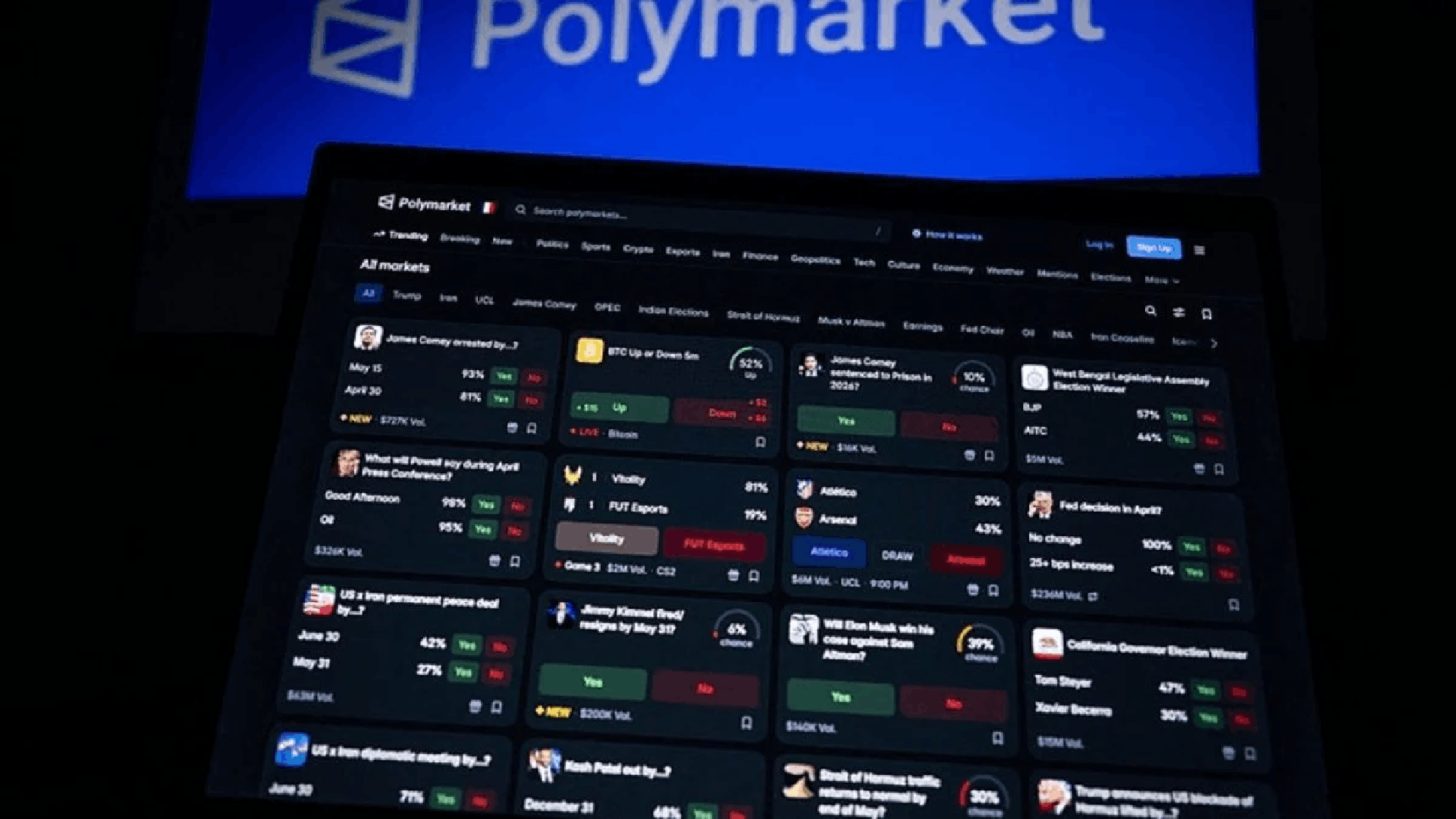
Gov. Tim Walz signed a comprehensive ban on prediction markets on Monday, making Minnesota the first state in the country to do so. The Commodity Futures Trading Commission (CFTC) swiftly and harshly condemned the historic action.
The comprehensive public safety measure SF 4760 contains provisions that make it illegal to run or assist in running a prediction market in Minnesota.
The federal agency that oversees prediction markets, the CFTC, claims that the restriction is detrimental to Minnesota's reputation as a major agricultural state and hurts the state's farmers, many of whom have long depended on contracts that the commission regulates.
"This Minnesota law turns lawful operators and participants in prediction markets into felons overnight,” said CFTC Chairman Michael Selig in a statement. “Minnesota farmers have relied on critical hedging products on weather and crop-related events for decades to mitigate their risks. Governor Walz chose to put special interests first and American farmers and innovators last.”
Commodities futures contracts, which are CFTC-regulated derivatives, have long been utilized by agricultural producers for risk management and hedging.
CFTC Sees Arizona Parallels in Minnesota
Although Minnesota is the first state to outlaw prediction markets, it is not the first to try to prevent yes/no transactions.
The largest US prediction market operator, Kalshi, was the target of a 20-count criminal complaint filed in March by Arizona Attorney General Kris Mayes (D). The complaint alleges that Kalshi breaches state laws by providing sports event contracts and derivatives linked to election results.
Arizona was swiftly sued by the CFTC, and a federal judge recently granted Kalshi a preliminary injunction, preventing Arizona from filing criminal charges against the business.
“In a lawsuit filed by the CFTC, a federal court in Arizona recently issued a preliminary injunction blocking Arizona from using its gambling laws to criminally prosecute prediction market operators,” according to the CFTC. “The Commission has also filed lawsuits against Connecticut, Illinois, and New York, and has filed amicus briefs in the U.S. Court of Appeals for the Sixth and Ninth Circuits and the Supreme Judicial Court of Massachusetts.”
Numerous Political Consequences
Walz, the Democratic nominee for vice president in 2024, may face political backlash if he bans prediction markets in Minnesota, especially at a time when the state is facing accusations of rampant fraud.
According to sources quoted in a story published in the Minnesota Star Tribune on Sunday, state officials' failure to respond to indications of fraud in the state was "an open secret." Steve Grove, who was Walz's Commissioner of the Minnesota Department of Employment and Economic Development (DEED), is the paper's publisher and CEO.
Due in part to Donald Trump Jr.'s role as an advisor to Polymarket and Kalshi, the prediction market sector is sometimes seen as right-leaning.
However, the sector is actively pursuing both sides of the issue behind closed doors. Sean Patrick Maloney, a Democrat from New York who served in Congress for ten years, is the leader of the recently established Coalition for Prediction Markets (CPM), while Kalshi recently employed lobbyists with deep connections to Democratic legislators.
Former President Joe Biden chose US District Judge Laura Provinzino to handle the CFTC's case against Minnesota.